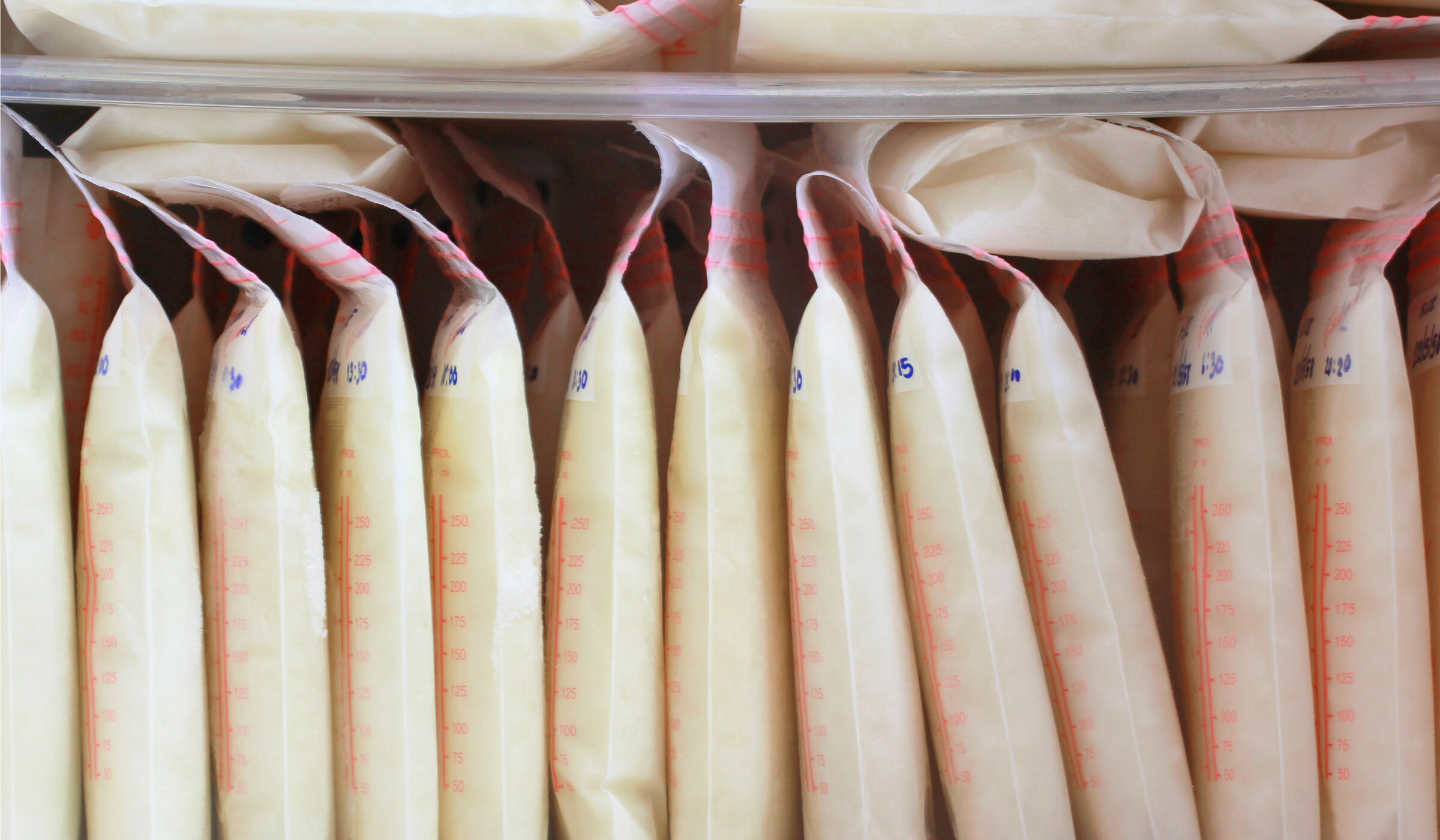
Breast Milk Storage Guide: How to Store, Freeze, and Thaw Breast Milk
Safely storing your hard-earned breast milk shouldn't require remembering everything you learned in ninth-grade biology. Here's what you need to know to store, freeze, thaw, and use your pumped liquid gold with confidence—no textbooks required!
How to store breast milk
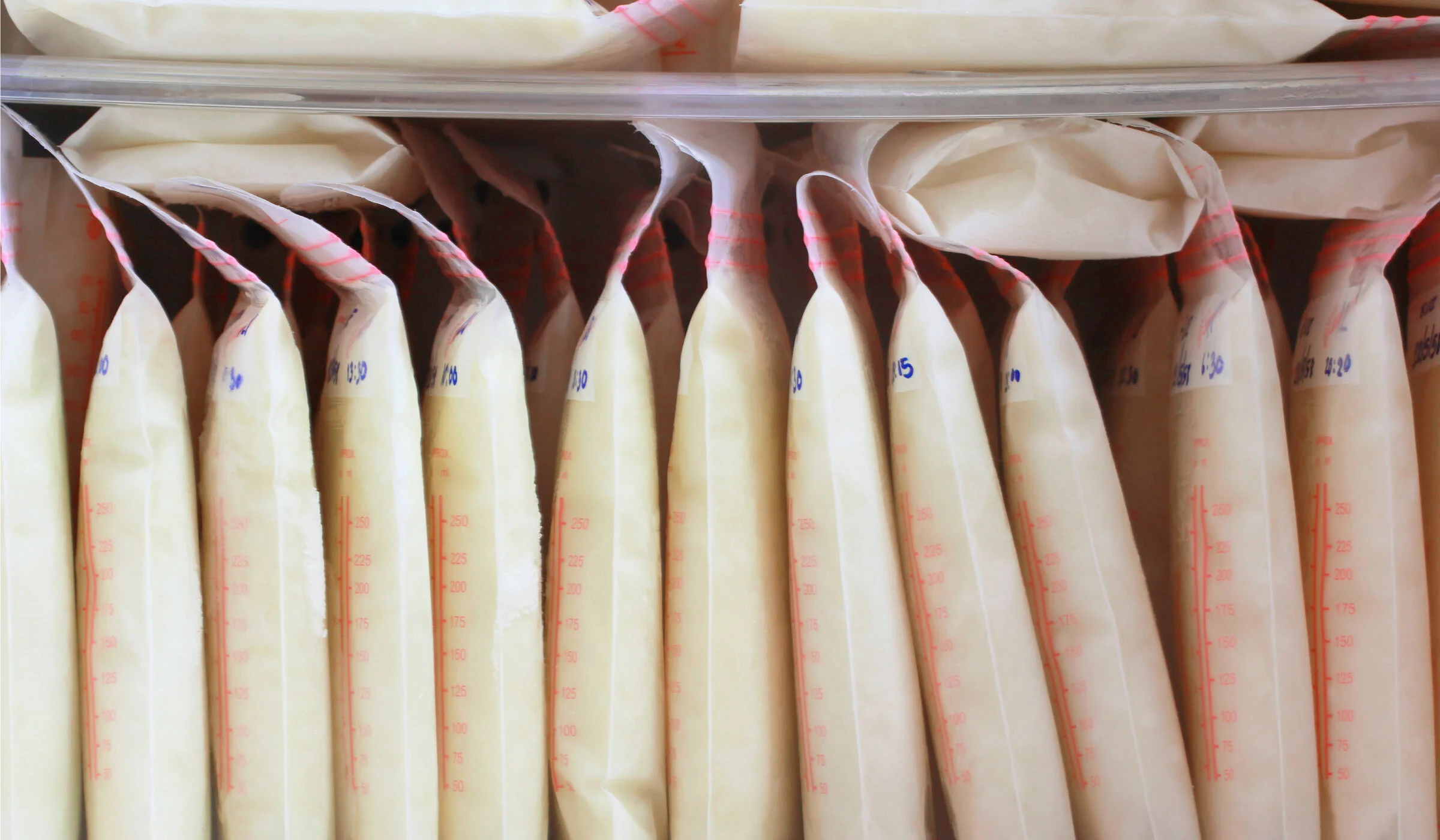
Use storage bags specifically designed for breast milk (they’re thicker than food-storage bags and have a stand-up bottom) or glass/plastic food-grade storage containers with well-fitting lids.
Date every container of breast milk. If you're sending milk to childcare, also label it with your baby's name.
How to freeze breast milk
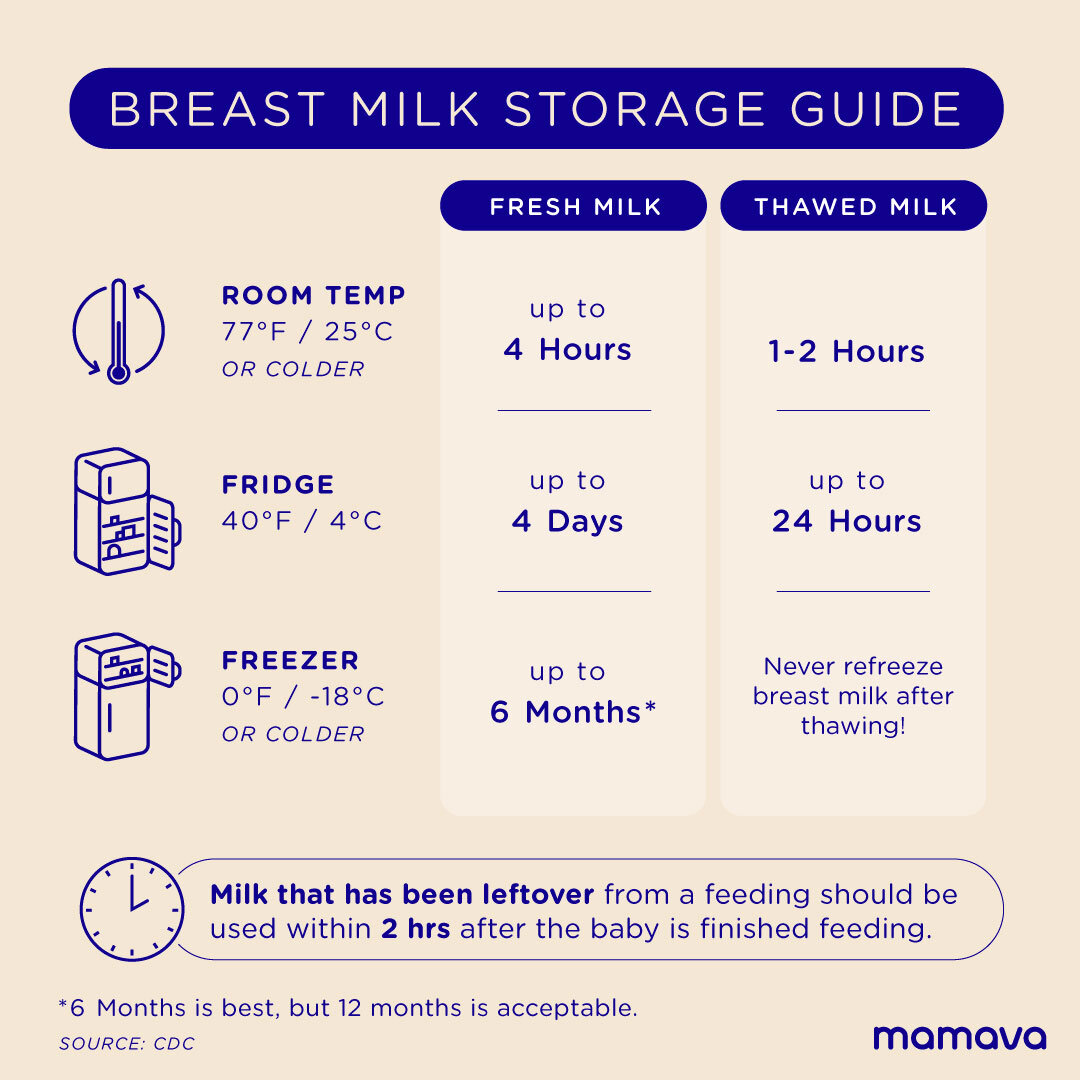
If you don’t plan to use your breast milk within four days of expressing it, freeze it.
Freeze breast milk in small amounts—2 to 4 ounces—to avoid wasting any that your baby might not finish in a feeding.
Leave an inch of space at the top of the container to accommodate expansion as the milk freezes. (Cough. Trust us on this one.)
Don’t store breast milk in the door of either the fridge or the freezer as the temperature fluctuates every time the door is opened.
Space-saving tip: If you’re using bags, place them flat in the freezer until they freeze, and then stand them up.
How to thaw breast milk
Thaw your oldest breast milk first. The first containers you freeze should be the first ones you use, as the quality of breast milk can decline over time.
Thaw breast milk overnight in the refrigerator, in a bowl of lukewarm water, or under lukewarm running water.
Don’t use the microwave to thaw or heat breast milk because it can destroy nutrients in breast milk and create hot spots, which can burn a baby’s mouth.
Breast milk can be served cold, at room temperature, or warmed—whatever your baby prefers.
Using frozen breast milk
It’s normal for stored breast milk to separate—just gently swirl bottles to reintegrate the layers.
Use breast milk within 24 hours of completely thawing it in the refrigerator (the clock starts once it's fully thawed—not when you move it from the freezer to the fridge).
Use breast milk within two hours once it’s been brought to room temperature or warmed.
You can add freshly expressed breast milk to refrigerated or frozen milk, but cool it down in the fridge before you do.
Never refreeze breast milk once it's been thawed.
Traveling? Freshly expressed milk can be stored in an insulated cooler with frozen ice packs for up to 24 hours before being transferred to a refrigerator or freezer.
Source: CDC’s Proper Storage and Preparation of Breast Milk
Mamava designs solutions to empower breastfeeding and pumping parents on the go, like our freestanding lactation pods, Mamava’s lactation space locator app, and other helpful resources.


More breastfeeding resources