
Designing Workspaces for Focus, Collaboration, and Productivity
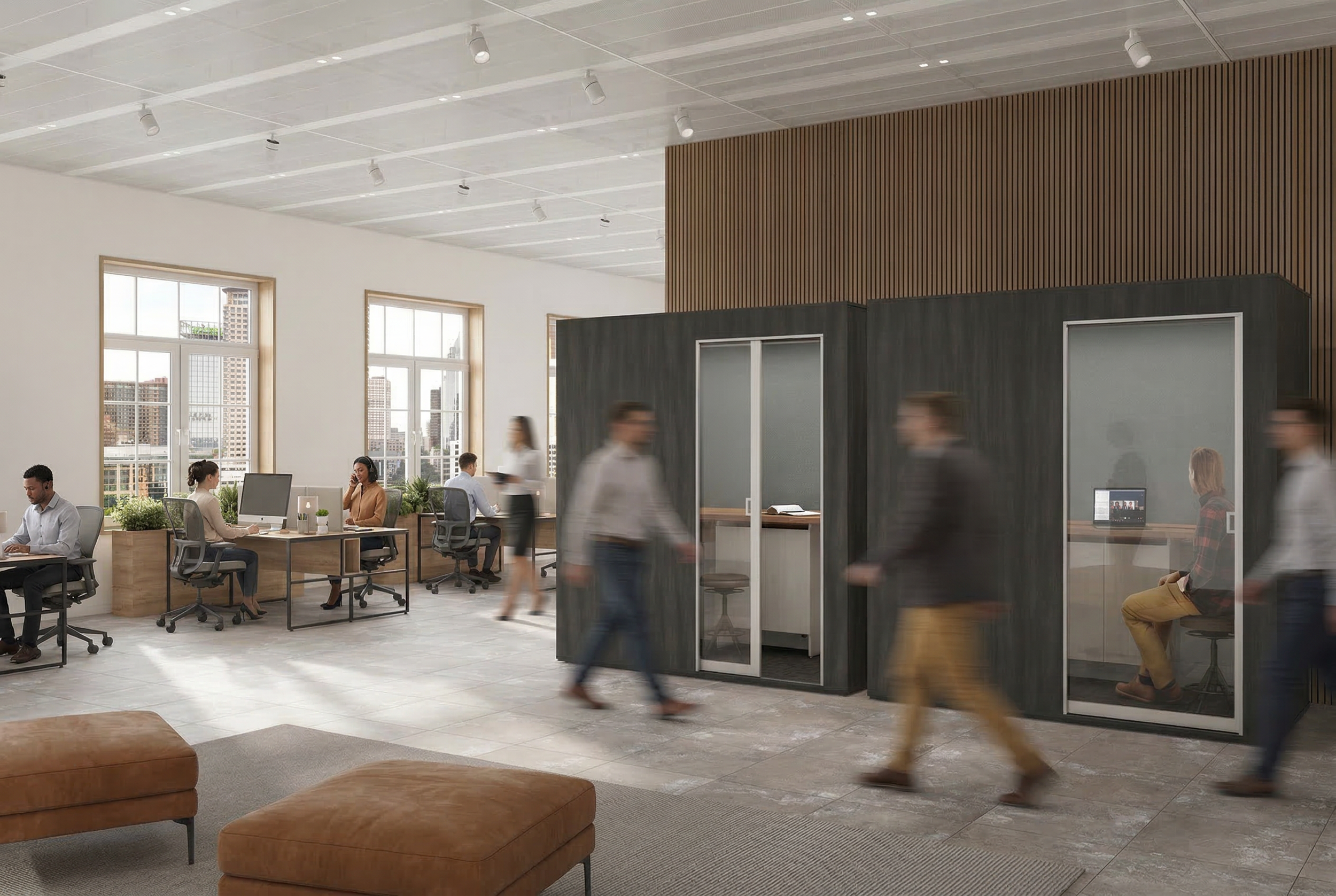
Open-plan offices have been popular for years because they support visibility, collaboration, and idea sharing—all important aspects of working as an effective team. But collaboration is only one dimension of work, and the reality is that employees move through multiple modes throughout the day from deep focus and individual problem-solving to group brainstorming and quick side chats.
A workspace that only supports one mode—constant openness—can make it harder for employees to do their best work. The most effective workplaces recognize that people think, focus, and communicate in different ways. They provide a mix of spaces that support those differences and help employees move between focus and collaboration as needed.
Research supports this approach. Studies show that background speech is one of the most disruptive forms of office noise, negatively affecting concentration, memory, and cognitive performance in the workplace. Providing a mix of quiet areas, private spaces, and collaborative zones helps employees maintain focus while still benefiting from the advantages of open offices. Designing environments that support different ways of working can improve both productivity and employee well-being by giving people the conditions they need to focus, collaborate, and recover throughout the day.
What is cognitive diversity in the workplace?
Cognitive diversity refers to differences in how people think, learn, and solve problems. These differences may stem from personality traits, work habits, learning styles, or sensory preferences. They also include neurodivergent conditions such as ADHD, autism, and dyslexia. Recognizing cognitive diversity is about acknowledging how varied human thinking already is and broadening our understanding of the different gifts of different minds. When employees can choose the environment that fits their task, they’re more likely to stay engaged and productive.
Personality differences: Introverts and extroverts
Employees also differ in how they gain energy and process social interaction. Introverts often recharge in quiet environments and prefer time to think before speaking. They thrive when they can work independently in focused settings. Helpful workplace design for introverts includes:
Quiet zones for deep work
Private desks or spaces
Opportunities for independent projects
Extroverts gain energy from interaction and collaboration. They thrive in dynamic spaces that support teamwork and discussion. Helpful workplace design for extroverts includes:
Collaborative work areas
Meeting rooms and project zones
Social spaces for discussion and networking
Balancing spaces for different personality traits means all employees can perform at their best.
How can workplace design support different work styles?
Effective workplace design supports multiple modes of work—not just collaboration. Organizations can better support different work styles by providing:
Quiet areas for focused, independent work
Collaborative zones for brainstorming and teamwork
Private spaces for calls or sensitive conversations
Flexible workstations that adapt to different tasks
This kind of environment gives employees control over how and where they work, which is a key factor in both performance and satisfaction.
Workplace environment and mental well-being
The built environment of workplaces don’t just affect how people work—they affect how people feel at work. Research shows that factors like noise, lack of privacy, and constant interruption can increase stress and cognitive load, making it harder for employees to focus and recover throughout the day. At the same time, broader workforce data shows the scale of the challenge:
76% of U.S. workers reported at least one symptom of a mental health condition
84% said workplace conditions contributed to a mental health challenge
81% say they will look for workplaces that support mental health in the future (U.S. Department of Health & Human Services)
Employee well-being is also closely linked to workplace outcomes. Higher well-being is associated with improved productivity, stronger performance, and increased engagement. Workplace design isn’t the only factor shaping mental health, but it is one organizations can directly control. Providing access to quieter, more private spaces can help reduce stressors tied to distraction and overstimulation.
Do privacy pods improve workplace productivity?
Privacy pods and booths provide acoustic separation and visual privacy, giving employees a place to focus, take calls, or have conversations without interruption. These spaces complement open offices, giving employees options to move between collaboration and focus, brainstorming and concentration. Research shows that reducing distractions improves concentration and cognitive performance, while employee well-being is strongly linked to productivity and engagement. Together, these findings suggest that providing access to quiet, private spaces can support better focus and more effective work.
The future of workplace design
There is no single “right” way to work. Employees bring different personalities, thinking styles, and work preferences into the workplace every day. Environments that acknowledge and support those differences make it easier for more people to do their best work. The shift isn’t away from open offices, but toward balanced environments that support both collaboration and concentration. Workplaces that provide that balance are better positioned to support employee performance, well-being, and the full range of our diverse human brains.
Mamava designs privacy and wellness pods—including freestanding lactation pods—to support parents and people seeking focus, care, and calm in workplaces and public spaces.


More resources