Making Space for Focus in a Distracted Workplace
The hidden cost of workplace distractions
Knowledge workers are interrupted as often as every two to three minutes by emails, Slack pings, meetings, or coworkers. That adds up to roughly 50–60 interruptions per day—and can quickly fragment both employee time and minds. Regaining focus after an interruption can take anywhere from several minutes to more than 20 minutes, depending on the complexity of the work, extending tasks and increasing cognitive strain throughout the day.
The impact shows up in more than lost time, however. Frequent interruptions increase stress, cognitive load, and time pressure—which can shape how employees experience their workday, not just what they get done. In a work environment defined by constant inputs, focus requires both physical and mental intentional space.
What counts as a workplace interruption?
Workplace distractions are any external or internal interruptions that break concentration during a task. These can include digital notifications, conversations, meetings, environmental noise, or task switching. The problem? Workplace interruptions are built into how modern work happens and they’re increasingly an issue in open office environments where interruptions often come from:
In-person conversations and ambient noise
Messages across tools like Slack or email
Calendar notifications and meetings
Digital tools support efficient collaboration, but they also create a steady stream of competing demands for attention. And these competing demands for attention cause another form of interruption: task switching. Often mislabeled as multitasking, task switching happens when the brain rapidly toggles between complex tasks. While simple activities (like walking and talking) can happen simultaneously, focused work requires sustained attention.
How interruptions impact productivity and employee well-being
Lost time and productivity
Interruptions pause work, often extending the time it takes to complete it. The time required to refocus varies, but even brief disruptions can break momentum. Research from Dropbox and the Economist Intelligence Unit found that 28% of the workday is lost to distractions, totaling an estimated 581 hours per employee annually, and hundreds of billions in lost productivity.
Cognitive fatigue and reduced performance
Task switching consumes finite cognitive resources and repeated shifts in attention can lead to mental fatigue, and even reduced performance over time. Studies show that prolonged task switching can also weaken working memory and the executive function required for planning, problem-solving, and sustained focus. As the day becomes more fragmented, it becomes harder to maintain clarity and efficiency.
Increased stress and anxiety
Interruptions affect both employee output and how employees feel at work day to day. Not only does excessive task-switching impact our brains, but it also can temporarily increase stress levels, raising both blood pressure and heart rates, and has been associated with symptoms of depression and anxiety. Over time, that constant state of reactivity can take a toll on employee well-being. A workday defined by interruptions leaves little room for focus, recovery, or control—three factors closely tied to lower stress and better mental health.
How workplaces can design for focus
Eliminating interruptions entirely isn’t realistic in collaborative environments. Reducing unnecessary disruptions, however, is within reach. Supporting employee well-being starts with making space for focus, especially in environments where constant activity is the norm. Thoughtful workplace design recognizes that focus isn’t one-size-fits-all and creates space for different needs throughout the day—whether that’s collaboration, concentration, or a moment of privacy.
Create spaces for different types of work
Not all work requires the same environment. Effective workplaces provide a mix of:
Open areas for collaboration
Quiet zones for deep focus
Private spaces for calls, meetings, or heads-down work
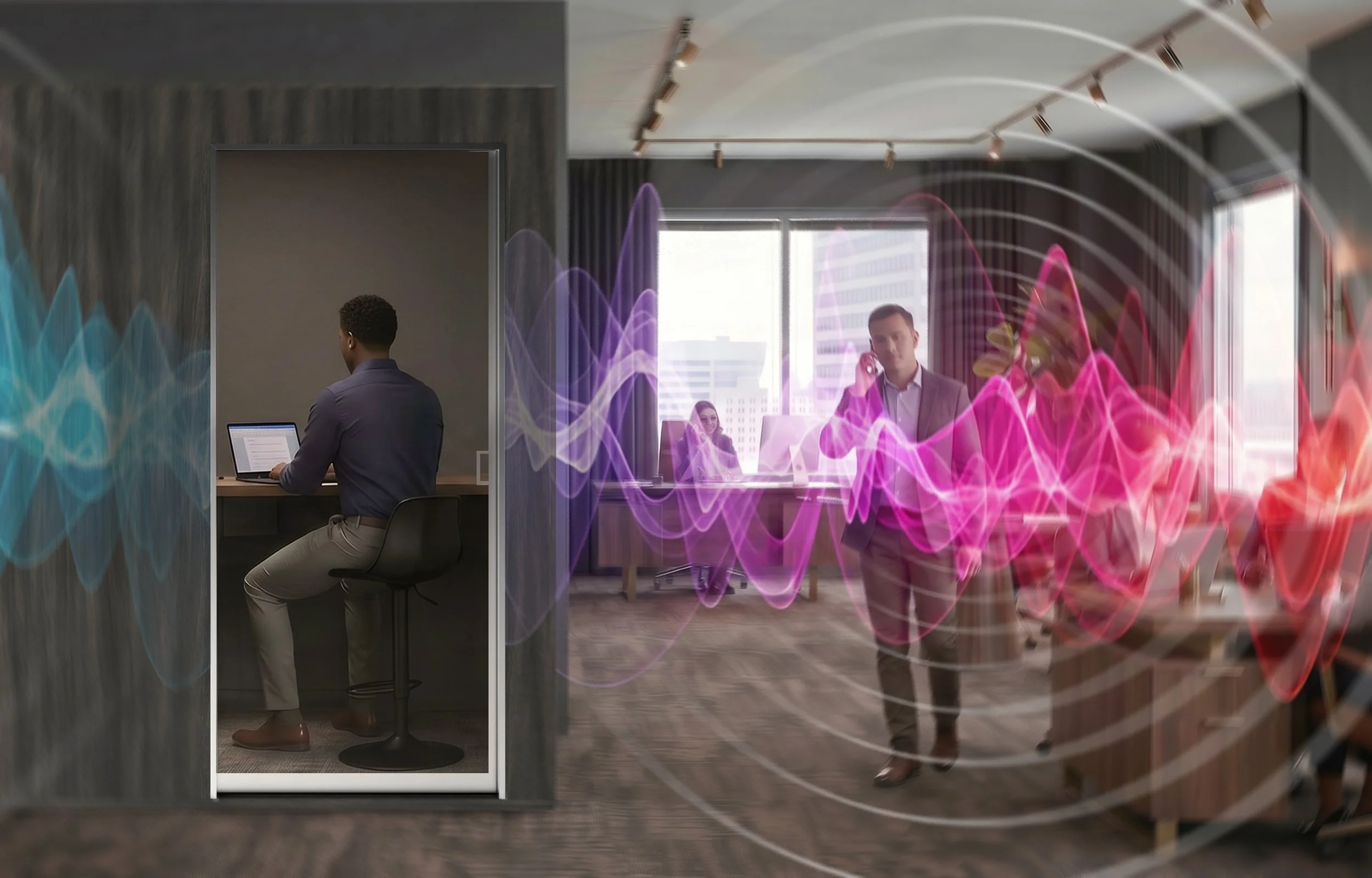
Flexibility in workspaces allows employees to choose the setting that best supports the work they need to do, the way they want to do it. In busy, shared environments, dedicated private spaces give employees a reliable way to step out of the noise and work with greater clarity.
Invest in acoustic and visual privacy
Interruptions and distraction can be about noise and conversation, but it's also about exposure. Providing spaces with both acoustic and visual privacy helps employees:
Concentrate without interruption
Take sensitive calls
Reset and recharge during the day
Research suggest that 35% of U.S. workers report chronic work-related stress, costing billions annually in lost productivity.
Normalize boundaries around focus
Physical workplace design works best when it’s reinforced by cultural practices and norms that demonstrate a deep understanding of what work looks like today. Simple policies can make a measurable difference:
Defined no-meeting blocks
Clear expectations around response times
Reduced after-hours communication
More and more organizations are implementing these practices to help protect time for focused work.
Designing for well-being is designing for performance
The most effective workplaces support focus by creating the conditions for it at the systems level, rather than leaving it entirely up to individuals. That means creating environments where employees can step away from distraction, find privacy when they need it, and return to their work with clarity. According to the American Psychological Association (APA) annual report on working in America, employers that want to improve well-being in the workplace need to proactively cultivate work environments that support flexibility and align with employee preferences for how they actually work.
When people have space to focus, work becomes more productive, more sustainable, and more human. This kind of intentional space is becoming an essential part of how workplaces support both performance and well-being.
Mamava designs privacy and wellness pods—including freestanding lactation pods—to support parents and people seeking focus, care, and calm in workplaces and public spaces.


More resources